

Surreal Horror Versus Supernatural Horror
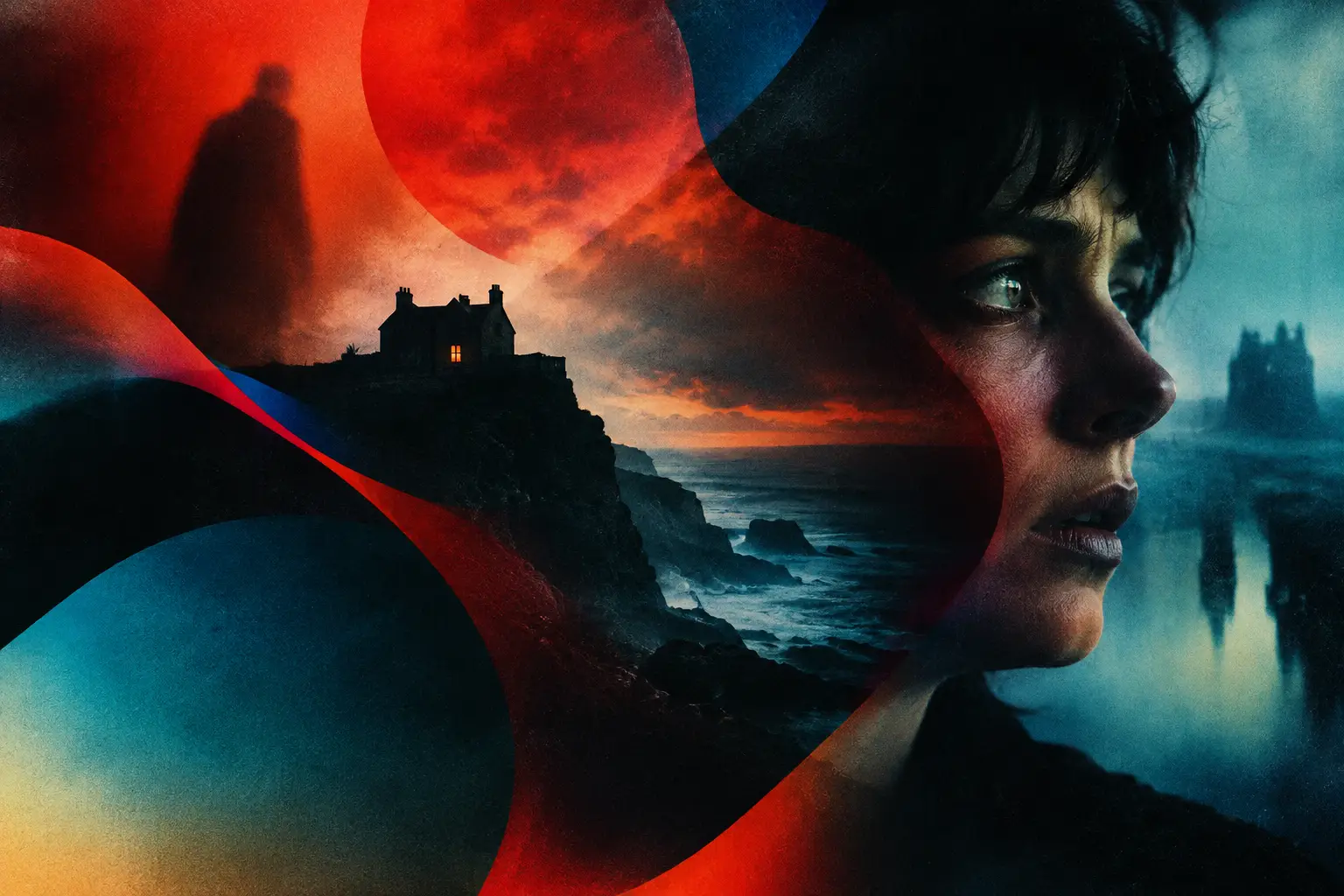
A woman hears footsteps in an empty house. In one film, a ghost is walking the corridor. In another, the corridor has become a psychic trap: its proportions change, its doors lead nowhere, and the woman may be the thing stalking herself. That is the essential divide in surreal horror versus supernatural horror. Both unsettle reality, but they ask profoundly different questions about where the terror comes from.
For viewers drawn to slow-burning psychological horror, the distinction is more than genre taxonomy. It determines the kind of fear a film leaves behind. Supernatural horror offers the awful possibility that something exists beyond the human realm. Surreal horror makes a crueler proposition: perhaps the human realm was never stable enough to trust.
What makes supernatural horror frightening?
Supernatural horror begins with an intrusion. A presence enters the domestic space, the body, the family history or the landscape. It might be a ghost, a demon, a curse, an apparition, or a force whose rules are only gradually revealed. The world may be dangerous, but it remains legible enough for the audience to recognise a violation.
That structure gives supernatural horror a particular dramatic charge. Someone sees what others cannot. A sceptic confronts evidence. A house retains a wound from the past. Grief becomes a channel through which the dead appear to speak. Even when the explanation is withheld, the narrative usually suggests that there is an external agency pressing upon the characters.
The finest examples do not reduce this force to spectacle. In The Innocents, The Others or Saint Maud, the alleged haunting is inseparable from loneliness, faith, repression and desire. Yet the question remains potent precisely because it can be answered either way: is there truly another presence, or has the mind made one because reality is unbearable?
Supernatural horror therefore thrives on thresholds. A mirror, a locked room, a séance, a childhood memory, a religious icon: these are portals between the known and the unspeakable. Its dread has shape. The audience can feel the edge of the world, then fear what might cross it.
Surreal horror versus supernatural horror: the central difference
Surreal horror does not necessarily introduce an invader. It destabilises the rules by which an invader could even be identified. Time folds. Cause and effect loosen. A character repeats an action without knowing it, encounters an impossible double, or walks through a familiar room that suddenly feels staged, hostile and unreal.
Where supernatural horror asks, “What is haunting this person?”, surreal horror asks, “What if consciousness itself is the haunted place?” The distinction matters because surrealism is not simply strangeness for decoration. Its dislocations expose what ordinary realism keeps buried: shame, denied violence, inherited guilt, erotic dread, compulsive memory and the terror of being trapped inside one’s own interpretation.
A ghost story may resolve around the discovery of a death, a betrayal or an ancient wrong. Surreal horror often refuses that relief. Its imagery can be coherent emotionally while remaining resistant to literal explanation. A blood-stained bath, a room that seems to breathe, an absurdly formal conversation held in the aftermath of violence: these moments are not clues to be tidied into a solution. They are pressure points.
This is why surreal horror can divide audiences. Viewers accustomed to plot as a contract may call it opaque. Others recognise that opacity as the form’s intellectual force. It does not ask you to solve a puzzle from outside the film. It makes you inhabit a consciousness in which the puzzle has become the prison.
The external curse and the internal labyrinth
The cleanest contrast is between an external curse and an internal labyrinth. Supernatural horror tends towards the former, even when its ghosts represent psychological pain. There is a disturbance with an origin, whether that origin is a dead child, a desecrated site or an act of moral transgression. The terror arrives from somewhere.
Surreal horror turns origin into an unstable proposition. Perhaps there was a crime. Perhaps there is a curse. Perhaps a character’s guilt has reorganised the world until every domestic object becomes accusatory. The film may offer evidence for several readings and grant final authority to none of them.
Neither approach is inherently more sophisticated. A bluntly explained ghost can be less frightening than an unseen one, but pure ambiguity can also become empty if it has no emotional architecture. The question is whether a film’s formal choices intensify its moral and psychological stakes. Strange images must carry weight. Silence must be charged rather than merely slow.
For patient cinephiles, this is the pleasure of the form. The slow burn is an intellectual filter. It asks viewers to notice the pause before a reply, the ritualistic way a family eats dinner, the colour draining from a room, the fact that a character never quite answers the question put to them. Atmospheric decay becomes narrative information.
When the two forms overlap
The most unsettling films frequently refuse to remain in one category. A seemingly supernatural presence may be the visual language of bereavement. A surreal rupture may imply a genuine metaphysical force. The ambiguity is not evasive when the film is precise about the emotional reality underneath it.
Consider the difference between uncertainty and vagueness. Uncertainty is crafted: the camera lingers on an expression, competing explanations gather force, and each interpretation reveals a different moral danger. Vagueness is simply the absence of thought. Arthouse horror earns ambiguity through pattern, performance and atmosphere, not by withholding basic dramatic intention.
This overlap is especially fertile in stories of domestic entrapment. The home is supposed to protect its inhabitants, yet it can also preserve old grievances, unequal power and unspoken acts of cruelty. A supernatural figure might expose the violence the household has concealed. A surreal environment might show how thoroughly that violence has colonised the mind.
Why surreal horror lingers longer
Supernatural horror can leave an audience afraid of the dark. Surreal horror may leave them suspicious of daylight, routine and their own powers of perception. Its dread is not confined to the apparition at the end of the hall. It is embedded in repetition, social performance and the unnerving possibility that normality is a carefully maintained set.
That makes surreal horror particularly suited to moral ambiguity. In a conventional haunting, characters may seek to defeat or appease the force. In surreal psychological horror, the deeper question is often whether anyone deserves release. What happens when grief hardens into punishment? When vigilante justice feels righteous until it becomes another form of violation? When a victim, a witness and an aggressor occupy the same fractured emotional space?
These films do not offer easy absolution, and they should not. Their power lies in forcing the viewer to sit with complicity. The monster may be real, imagined or both. The more disturbing possibility is that the character already knows what it wants.
How to watch each mode on its own terms
If you are watching supernatural horror, attend to the rules of the haunting. What has been disturbed? Who benefits from disbelief? What is the presence demanding, and why has it appeared now? Even unresolved ghost stories tend to build meaning through the tension between evidence and denial.
With surreal horror, watch for recurrence rather than answers alone. Notice repeated phrases, objects, gestures, colours and spatial arrangements. Ask what changes in a scene when it returns in altered form. The film may be operating according to dream logic, but dreams have their own severe grammar. A recurring image can expose a character more fully than a page of dialogue.
Above all, resist the urge to treat ambiguity as failure. Not every horror film needs to close every door. Some are built to leave the house open behind you, with no certainty about whether you have escaped it.
For viewers who want that uneasy territory - where domestic realism, moral injury and destabilised perception begin to bleed together - stream Ride the Snake free on YouTube, or choose the ad-free rental experience on Amazon Prime Video or Apple TV. Its uncompromising psychological dread is best encountered firsthand, then argued over afterwards.


Comments