

Why Anamorphic Cinematography in Horror Haunts
A corridor is rarely just a corridor in horror. Through an anamorphic lens, it becomes a horizontal trap: a space that seems to widen at the edges while withholding any safe place to stand. Anamorphic cinematography in horror does not merely make images look cinematic. It makes geography unstable, turns emptiness into accusation, and allows dread to gather in the margins long before anything enters the frame.
For viewers drawn to slow-burning psychological horror, that distinction matters. Fear is not always an event. Often it is a visual pressure, sustained across a widescreen image until the viewer begins to search its darkest recesses for proof that their unease is justified.
Why anamorphic cinematography in horror feels wrong
Anamorphic cinematography was historically associated with spectacle: landscapes, scale, movement, the sweep of epic drama. Horror repurposes that inheritance with real perversity. The wide frame promises visibility, yet its breadth creates more territory to distrust. A character can occupy only a small portion of the image while the rest sits silent, exposed and ominously available.
This is the first contradiction at the heart of the format. A conventional close frame can lock us inside a character's panic. Anamorphic width can make that character look abandoned by the world. In domestic horror, a kitchen, lounge or stairwell ceases to be functional architecture and becomes a stage for entrapment. The room is visible, but never fully knowable.
The characteristic optical behaviour contributes to this unease. Horizontal flares can cut across darkness like an intrusion. Oval bokeh softens distant lights into strange, watchful shapes. Edge distortion may subtly bend a familiar room, making it feel less like a home than a memory corrupted by grief, guilt or obsession. Used with restraint, these qualities feel less like visual decoration than psychic weather.
That restraint is crucial. Anamorphic images are not inherently frightening. Excessive flare, shallow focus or conspicuous distortion can quickly become mannerism. The strongest work lets the lens serve a scene's moral temperature. If a figure is being suffocated by a secret, the frame should not announce its cleverness. It should make the audience feel the pressure before they can name it.
The widescreen frame as a site of structural dread
Horror often depends on the battle between what is shown and what is withheld. Anamorphic composition intensifies that battle because its horizontal canvas makes negative space unusually expressive. A filmmaker can position a character on one side of the frame and leave the other side apparently vacant. The emptiness then becomes active. It asks a primitive question: what could be there?
This is not simply a set-up for a figure appearing behind someone. That is the most literal use of the technique, and often the least interesting. More unsettling is the possibility that nothing appears at all. The viewer has still been forced to inhabit the gap, to examine it, to project a threat into it. The film has made the audience complicit in its own fear.
Such framing suits stories of surveillance, bereavement, paranoia and domestic fracture. The haunted space need not contain a ghost. It may hold an accusation, an unspoken crime or the unbearable residue of someone who is absent. In psychological horror, the widescreen image can hold competing realities at once: the person who insists everything is normal and the shadowed evidence that it is not.
A door at the far end of an anamorphic frame can become an ethical threshold. A character may cross it seeking relief, vengeance or confirmation. Yet the composition has already suggested that there is no clean exit. That is structural dread: not the fear of one sudden shock, but the sense that the story's architecture has closed around its characters.
Light, darkness and the contaminated image
Anamorphic horror is frequently discussed through its night exteriors, neon flares and deep black interiors. Those are potent tools, but darkness alone is not atmosphere. What matters is contrast in both visual and emotional terms.
A harsh practical light in a dark room can divide a face, leaving one expression legible and another concealed. A sodium-lit street can turn a return home into a passage through diseased colour. A streak of flare across a character's eyes may briefly obscure their gaze at the exact moment the audience wants certainty. The image does not need to be murky to be oppressive. Often the more disturbing choice is to show the room clearly enough that there is nowhere for the viewer's imagination to rest.
The best anamorphic horror therefore treats light as contamination rather than comfort. Daylight can flatten a domestic interior into clinical exposure. Warm lamps can make a room feel feverish rather than inviting. A beautiful image may carry the chill of a crime scene. This tension between formal beauty and moral rot is one reason the format belongs so naturally to prestige, auteur-led horror.
When widescreen is more powerful than a jump scare
The jump scare delivers an immediate physical response. It has a place, but it is a closed mechanism: tension, release, recovery. Anamorphic horror can pursue a more lingering effect. It gives the viewer time to notice the composition, then turns that act of noticing against them.
Consider a static shot held a few seconds too long. A character sits in the foreground. Behind them, the frame stretches into a dim hallway, an open doorway, a patch of reflective glass. Nothing changes, yet the audience's attention begins splitting across the image. They are no longer passively receiving fear. They are scanning, anticipating, inventing.
That patient approach is an intellectual filter. It will not satisfy viewers seeking a conveyor belt of jolts, and it should not try to. Its reward is more intimate: fear that survives the scene because it has entered the spectator's own habits of looking. The most unnerving horror does not tell us when to recoil. It makes us doubt our right to keep watching.
There is also a practical lesson here for independent filmmakers. Anamorphic glass cannot compensate for weak blocking, vague production design or unearned darkness. A controlled wide composition demands precision. Where does the actor stand? What does the empty side of the frame know? Is the camera observing, accusing or trapping? A modest location can become charged when every line, lamp and doorway carries narrative weight.
A visual language for moral ambiguity
Psychological horror becomes most potent when terror is bound to judgement. Who deserves punishment? When does grief become cruelty? Can a private act of revenge ever restore order, or does it merely reproduce the violence it condemns?
Anamorphic framing is especially suited to these questions because it resists simple isolation. Even a lone character appears in relation to their environment, hemmed in by furniture, architecture and vacant space. The frame insists that actions have surroundings. A decision made in one corner of the image can poison the whole room.
This is why widescreen horror so often feels theatrical in the best sense. It gives actors room to move through emotional states rather than simply present reactions for the camera. A pause at the edge of the frame, a refusal to enter a lit space, a face held against a corridor of darkness: these choices let performance and composition argue with each other. The result can be more disturbing than explicit violence because it locates danger inside character.
See the frame, then face what it contains
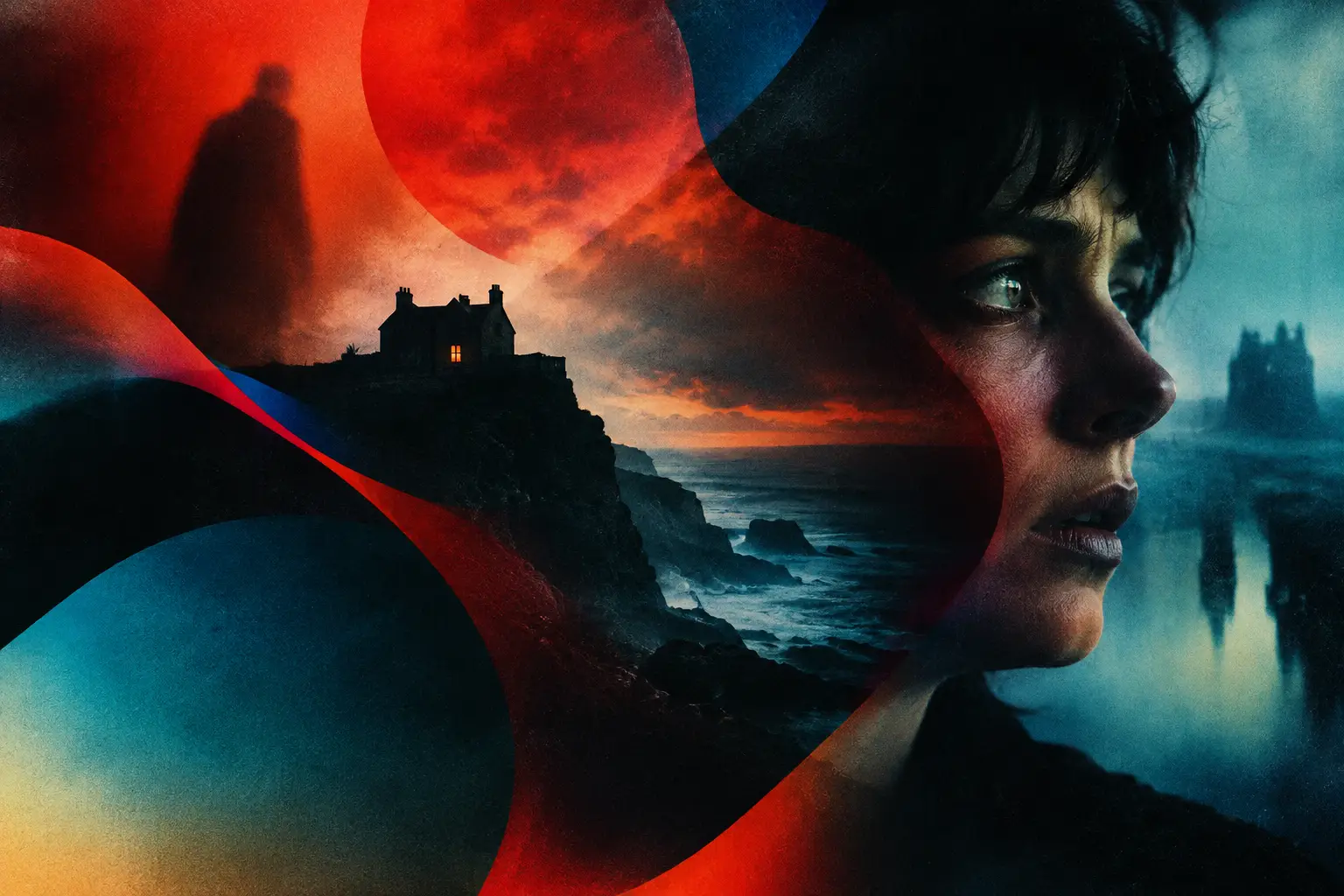
If your appetite is for atmospheric decay, moral trespass and horror that trusts silence, watch Ride the Snake on the official free YouTube release, or choose the ad-free rental experience on Amazon Prime Video or Apple TV. Its slow-burning psychological terrain is built for viewers willing to sit with the image after certainty has already begun to fail.
The next time a horror film leaves a wide strip of darkness beside its protagonist, do not wait for the expected apparition. Ask what the frame has made you fear before anything happens. That is where anamorphic dread does its most enduring work.


Comments