
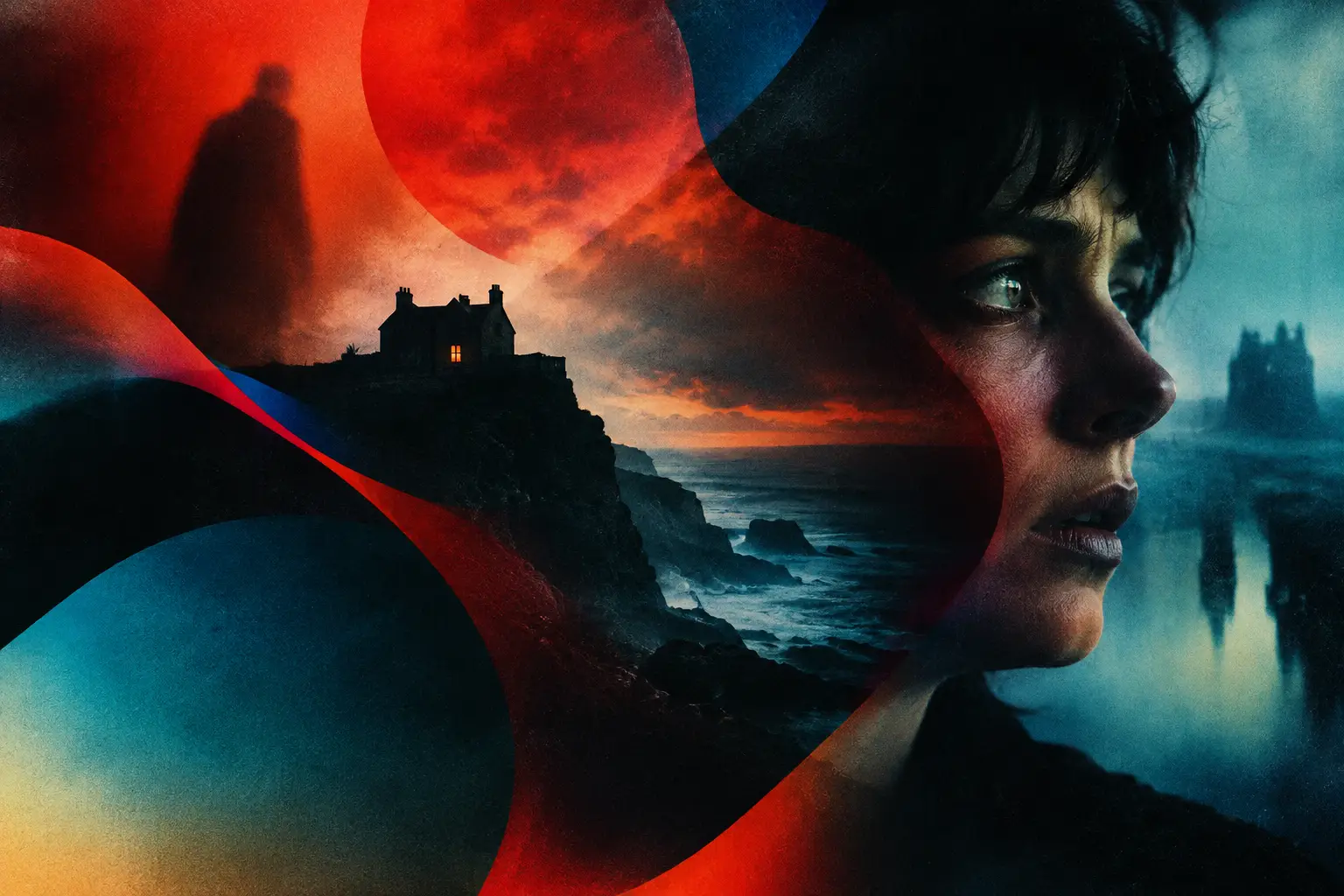
British Horror Cinema at Its Most Unsettling
A locked room, a bruised conscience and a house that no longer feels safe: British horror cinema has rarely needed monsters to make its point. Its deepest terrors emerge from intimacy gone rancid - family loyalty, private grief, moral certainty and the dreadful moment a person decides that ordinary justice is no longer enough.
That tradition matters because it asks more of its audience than a startle reflex. It makes viewers inhabit uncertainty. Who deserves sympathy? Where does care become control? Can violence ever restore a damaged moral order, or does it merely spread the damage through another household?
For viewers seeking that strain of slow-burning psychological horror, Ride the Snake is available to watch free through its official YouTube release, with ad-free rental options on Amazon Prime Video and Apple TV. It is a film made for the viewer willing to remain in the room when the room becomes unbearable.
Why British horror cinema begins at home
The defining location of British horror is not necessarily the cemetery, the laboratory or the abandoned hotel. It is the domestic interior: a terrace house, a kitchen after dark, a corridor whose familiarity has curdled into surveillance. This is horror shaped by proximity. The threat knows the layout. It has access to the kettle, the family photographs and the small rituals that once made a life bearable.
That domestic focus gives the form its peculiar force. American genre cinema often has the scale to externalise evil - a town, a cult, a wilderness, a catastrophe. British horror can be fiercer when it contracts. A single argument becomes a sealed chamber. A bereavement becomes a theology. A woman alone in a house becomes not a stock image of vulnerability, but a question about what society permits her to endure before calling her dangerous.
This is why atmosphere is not decorative. The drained light, held silences and apparently insignificant pauses create structural dread. They establish the sensation that the characters are trapped not only by a building, but by history, class, shame and unfinished feeling. The horror is rarely waiting outside. It has already crossed the threshold.
Slow burn is an intellectual filter
There is a persistent demand that horror explain itself quickly: identify the threat, accelerate the plot, provide the mechanism. Yet the most durable British films resist that pressure. Their pacing gives dread time to gather weight. The audience is not simply told that something is wrong; it is made to notice the wrongness in a glance held too long, a conversational evasion or the oppressive quiet after a confession.
This approach can divide viewers, and rightly so. A deliberately theatrical rhythm will frustrate anyone expecting a conveyor belt of shocks. But polarisation is not evidence of failure. It is often proof that a film has refused to flatten its experience into formula. Cinema of this kind is built for viewers who value atmosphere, performance and implication over studio-calibrated reassurance.
Saint Maud offers one recent expression of that pressure-cooker intensity, turning faith and loneliness into a private inferno. The Invitation finds menace in social etiquette and exclusion. Heretic stages belief as an architectural trap, while Longlegs makes procedure feel contaminated by nightmare. Their methods differ, but each understands a central truth: sustained unease is more corrosive than spectacle when the film has the confidence to withhold release.
British horror cinema and the violence of certainty
The genre becomes most provocative when it refuses a clean moral division between victim and perpetrator. Grief can invite compassion and still become destructive. A desire for justice can contain an appetite for punishment. A home can be a sanctuary for one person and a prison for another.
Ride the Snake occupies this troubling territory without treating psychological breakdown as a fashionable puzzle box. Its tension lies in the collision between domestic entrapment, bereavement and the seduction of vigilante thinking. The crucial question is not merely what has happened, but what a wounded person believes they are entitled to do next.
That moral ambiguity places the film in a distinctly British lineage of intimate, character-led horror. The genre’s sharpest works understand that violence does not arrive in a vacuum. It follows humiliation, neglect, rage and the failure of institutions to see a person before they become a problem. None of this absolves cruelty. It makes cruelty legible, which is far more disturbing.
The result is an uncomfortable form of spectatorship. We may recognise the impulse to retaliate before we reject its consequences. We may understand a character’s despair before seeing the damage it inflicts. Horror becomes serious when it does not ask for easy allegiance. It asks what we are prepared to excuse once suffering has given someone a compelling story.
The performance is where dread becomes human
Atmospheric horror lives or dies by faces. If the performers cannot make silence active, then the house is only a set and the pauses are merely empty. In the best British genre work, acting carries the pressure of what cannot be said directly. A hand stopping at a door handle, a voice tightening around an ordinary sentence or a sudden withdrawal of eye contact can do more than a page of exposition.
Ride the Snake draws its force from that human scale. Its psychological dread is not an abstract mood laid over a plot. It is embodied conflict, played close enough to feel invasive. The presence of Suzanna Hamilton brings a particular dramatic weight to this world, while the film’s connections to performers associated with Kenneth Branagh’s Hamlet reinforce its serious theatrical inheritance. These are not prestige ornaments. They suit a film concerned with conscience, accusation and the performance of control.
Theatre and horror have always been natural allies. Both depend on the charged space between what is spoken and what the audience perceives. Both understand that a confined setting can feel vast when the stakes are spiritual or emotional. In an uncompromising auteur vision, a room can become a courtroom, a confession booth or a site of ritual.
Why cultural specificity strengthens the nightmare
British-Asian independent filmmaking brings another vital dimension to this terrain: the right to make horror culturally specific without translating every feeling into a generic genre shorthand. Identity is not an accessory applied to a familiar story. It shapes family structures, silences, obligations and the meanings attached to respectability, shame and survival.
Shani Grewal’s direction treats psychological terror as something rooted in social experience rather than imported from a catalogue of horror gestures. That grounding gives Ride the Snake its abrasive intimacy. The film does not ask its audience to admire trauma from a safe distance. It presses on the ways private pain is managed, concealed and inherited.
This is where independent horror remains indispensable. Freed from the need to please every demographic at once, it can preserve ambiguity. It can leave a scene open, let a character remain difficult and trust the audience to do the moral labour. Not every viewer will welcome that demand. The right viewer will recognise it as respect.
A film to argue with, not consume
The healthiest relationship with horror is not passive. A film should leave an argument behind: about culpability, about gendered danger, about whether vengeance can ever be separated from self-destruction. If a viewer walks away certain that they have solved every character and every motive, the work may have offered too little resistance.
Ride the Snake belongs with the films that make discomfort productive. Its slow-burning construction is a refusal of disposable fright. Its domestic spaces hold the weight of moral collapse. Its psychological tension is not a trick designed to be forgotten by morning, but an invitation to examine the stories people tell themselves before crossing an irreversible line.
Watch Ride the Snake free on the official YouTube release, or choose the ad-free experience on Amazon Prime Video or Apple TV. Bring patience, keep your judgement unsettled, and let the film make its case in the dark.


Comments