
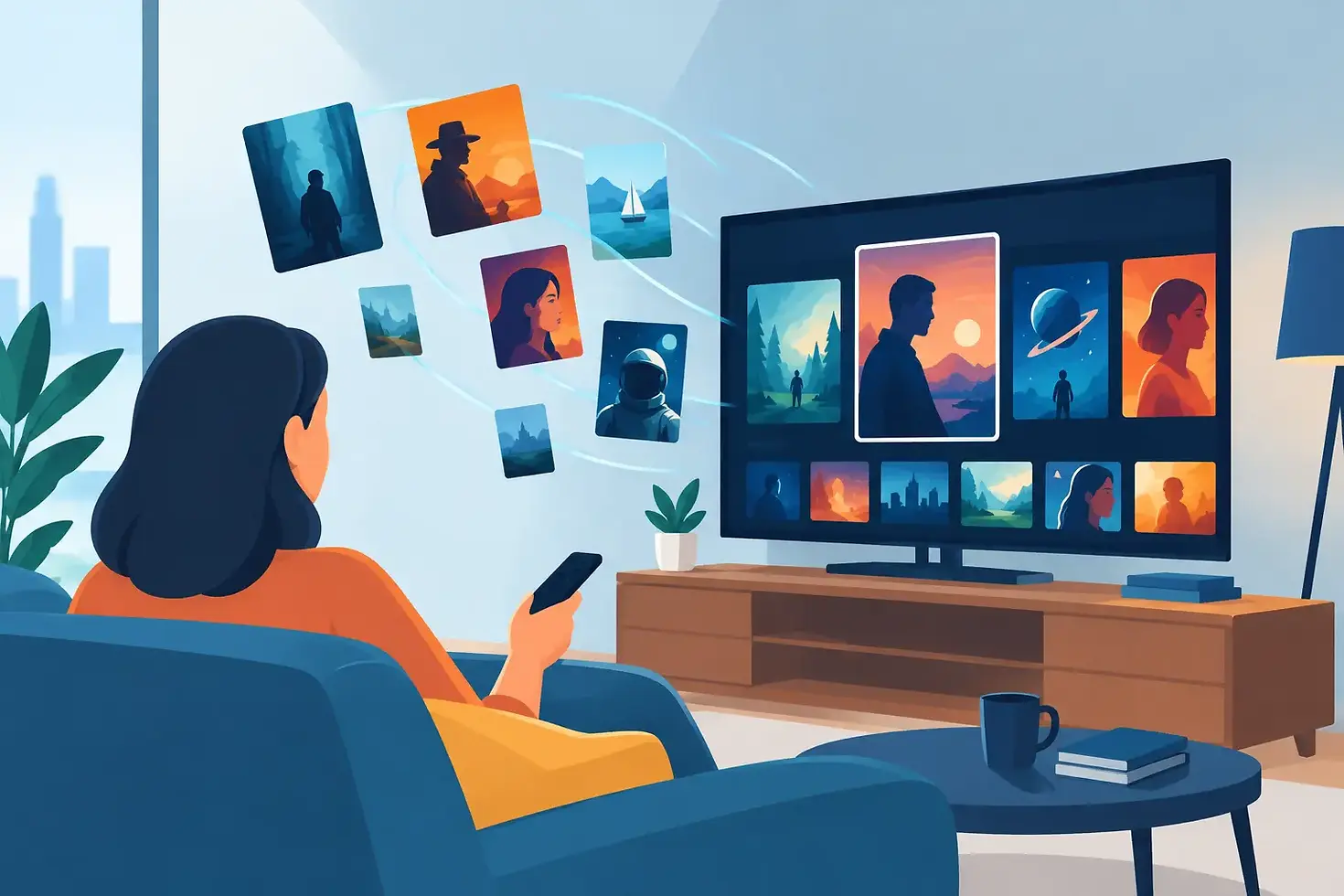
Film Discovery Trends Are Changing What We Watch

A film can now be available everywhere and still remain invisible. The real contest is no longer simply getting a title released. It is earning the moment when a curious viewer stops scrolling, presses play and decides this is worth 90 minutes of their attention. That is where film discovery trends have become more revealing than viewing figures alone.
For independent cinema, especially slow-burning psychological horror, discovery is not a matter of shouting louder than studio campaigns. It is about placing the right provocation in front of the right viewer: an image with texture, a trailer that promises unease rather than explanation, a verdict sharp enough to invite rebuttal. Audiences have more choice than ever. They are also more alert to the difference between a film made to fill a slot and one made with a point of view.
Film discovery trends favour conviction over volume
Recommendation systems still shape what people see, but their authority is weakening. Viewers understand that an algorithm can identify a previous click; it cannot always identify a hunger. Someone who watched a supernatural thriller may be offered five more, yet what they actually want could be a British chamber piece, a surreal family drama or a horror film whose dread comes from performance and atmosphere rather than a creature in the dark.
This creates an opening for films with a distinct identity. Generic tags are useful for filing cabinets, not for desire. “Horror” tells a viewer where a film broadly sits. “Slow-burning psychological horror shot with anamorphic menace” gives them a reason to care.
The trade-off is clear. A more precise promise may narrow the immediate audience, but it deepens the connection with people likely to champion the film. Independent work does not need to impersonate a four-quadrant event. It needs to find the viewers who are bored by four-quadrant events.
The trailer has become a taste signal
A trailer is no longer just an advert for a forthcoming release. It is often the work’s first critical argument. In a crowded feed, viewers make rapid judgements about formal control: the rhythm of a cut, the confidence of a held shot, the sound design, the faces a filmmaker chooses to linger on.
For conventional genre marketing, this can mean a parade of shocks and premises. For arthouse horror, it should mean restraint. Show too much and the film loses its mystery. Show too little and the viewer has no entry point. The stronger approach is to establish a mood so specific that the right audience recognises it immediately.
A good trailer does not explain every turn. It establishes a contract. It says: this film will be patient; it will be strange; it will ask you to stay with discomfort. That honesty matters. A viewer drawn in by the promise of a loud jump-scare ride may resent a measured, ambiguous film. A viewer seeking dread, moral instability and visual atmosphere may consider that same measured pace the entire point.
Short-form clips can support this work, but they should not flatten it. A memorable line, a disturbing image or an actor’s glance can travel quickly. Yet the clip must lead back to an experience that feels larger than its own most shareable seconds.
Trusted taste is replacing the old gatekeepers
Festival selections, star ratings and newspaper reviews still matter, but they are no longer the sole route to credibility. A programmer, critic, horror podcaster or sharply opinionated friend can trigger a viewing decision as effectively as a traditional review. The crucial factor is not scale. It is alignment.
Film audiences increasingly follow people whose taste they can map. They may disagree with a critic’s verdict and still trust their recommendation because they understand the sensibility behind it. “If they found it too cold, I may love it” is a more useful form of discovery than an anonymous score.
That shift rewards specificity in how a film is presented. Talk about authorship. Talk about the visual grammar. Name the tension between realism and surrealism. Give an audience enough material to decide whether the film belongs in their own cinematic lineage.
It also means that disagreement is valuable. A film that produces only mild approval tends to disappear. A film that earns fierce devotion and genuine resistance has a second life in conversation. One film. Four radically different verdicts. That is not a problem to be managed away. It is evidence that the work has reached beyond passive consumption.
Free access changes the first question
Transactional barriers are especially punishing for unfamiliar independent films. Before committing money, viewers may ask whether a title is worth the risk, whether it is available on their preferred platform, and whether they will ever have time to return to it. Each question is another chance to abandon the search.
Free, legitimate viewing changes the equation. The question becomes simpler: does this look like my kind of film? That is a powerful invitation when the film has a distinctive voice and a clear audience. It gives curious viewers permission to take a chance, while leaving room for the film itself to make the case.
This does not mean free access is automatically the answer for every release. A cinema run can give a film occasion, press attention and the collective pressure that certain works need. Transactional releases can signal value and support a carefully planned windowing strategy. But direct availability is particularly potent when discovery depends on lowering friction and allowing word of mouth to build at its own pace.
For a project such as Ride the Snake, free YouTube viewing suits the proposition. The film can meet audiences where they already encounter trailers, commentary and recommendations, without pretending that a psychologically demanding feature is disposable content.
Cultural specificity is no longer a niche footnote
The old marketing habit was to sand down cultural particularity in pursuit of a supposedly universal audience. It rarely made films feel universal. It made them feel interchangeable.
Viewers seeking independent work increasingly want a sense of place, perspective and authorship. British-Asian creative identity is not merely a box to tick beneath a synopsis. It can shape the emotional temperature of a film, its family dynamics, its silences and its understanding of fear. When that identity is integral to the filmmaking, it gives audiences something more compelling than generic representation: a world seen from a particular angle.
The same applies to regional texture, class, language and social pressure. Horror has always drawn force from what a culture suppresses. Films become more discoverable when their marketing is confident enough to state the world they emerge from, rather than reducing every story to the broadest possible genre label.
Discovery now continues after the first viewing
The most useful metric is not only whether someone watches. It is what they do afterwards. Do they send the trailer to a friend? Do they argue over an ending? Do they search for the director’s other work, rewatch a scene or write a verdict of their own?
This is where auteur framing has real value. A writer-director’s presence gives audiences a route into a film beyond plot. They can engage with choices: why a scene is held too long, why a performance is controlled rather than expressive, why the camera seems to watch rather than rescue. That is the language cinephiles use when they decide a film deserves to endure.
Marketing should leave room for that activity. Give viewers a strong proposition, but do not close every interpretive door. Explain enough to draw them in; withhold enough to make their response feel like theirs.
The sharper question for filmmakers
The useful question is not, “How do we beat the algorithm?” No independent film wins by becoming more generic than the content it sits beside. Ask instead: what makes the right viewer feel that this film was made for their particular appetite?
That answer may be a face, a format, a director’s nerve, an unsettling premise or the promise of a divided room afterwards. Make it visible. Let the trailer carry atmosphere. Let critics and viewers disagree in public. Remove unnecessary barriers to the first watch.
The next film a viewer remembers will not necessarily be the one they were shown most often. It may be the one that gave them a reason to look twice, then a reason to tell someone else.


Comments