

Free Viewing Versus Paid Rentals for Film Fans

A rental screen asks a blunt question before the first image appears: is this film worth your money? Free viewing versus paid rentals removes or preserves that moment of resistance, and for independent cinema it can shape everything that follows - discovery, expectation, attention and argument.
For a studio release with an enormous advertising budget, a rental fee is often just part of the furniture. For a slow-burning psychological horror film, it can become a locked door. The viewer who might have taken a chance on an unsettling, formally daring British feature may hesitate when the unknown comes with a price tag. Remove the charge, and that hesitation becomes curiosity.
Free viewing versus paid rentals: the real difference
The usual argument is financial. Paid rentals create a direct transaction: a viewer pays, a platform takes its share, and the filmmaker receives a portion. Free viewing appears to surrender that certainty. But independent film is rarely a simple calculation of one ticket, one return.
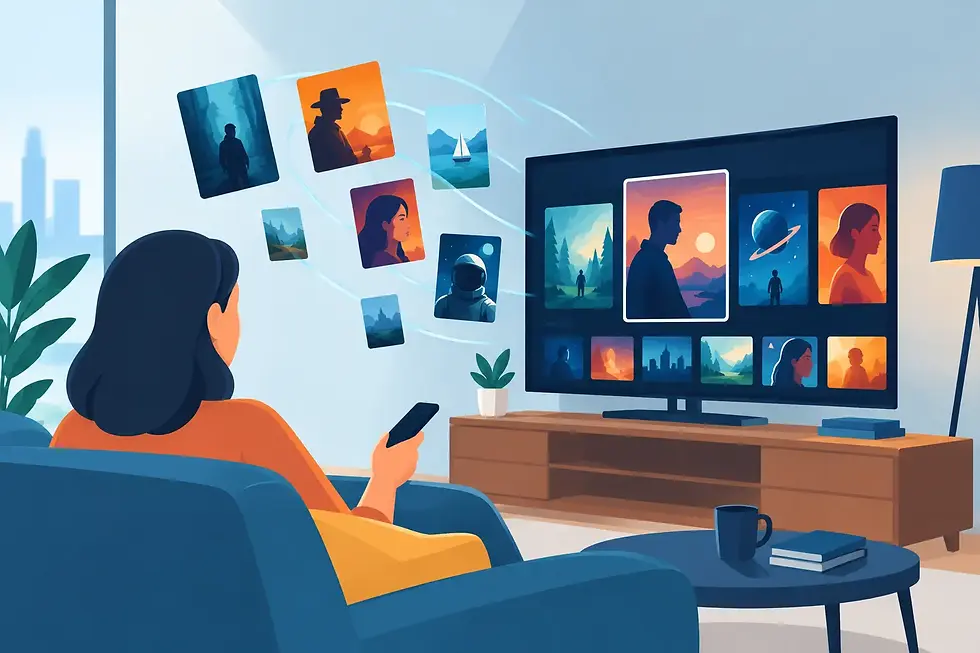
Free access changes the scale of the invitation. A trailer can lead directly to the full work rather than a checkout page. A curious viewer can watch because the image, premise or cast has caught their attention, not because they have decided the film is a safe purchase. That matters most for work which does not promise familiar genre comforts.
A surreal horror film cannot always be sold in a sentence. Its force may sit in a performance held a beat too long, an uncomfortable silence, a family dynamic that curdles gradually, or an anamorphic frame that makes ordinary space feel wrong. Paid rental models ask audiences to trust those qualities in advance. Free viewing lets the film make its own case.
That does not mean free viewing makes every film easier to value. It makes the first encounter easier. Earning attention is still difficult, perhaps more difficult, when viewers can leave at any point without feeling they have spent anything. A film must establish its mood, authority and point of view quickly enough to hold an audience, while remaining faithful to its own tempo.
The price of friction
Rentals create friction, but friction is not automatically a flaw. Paying can make a viewer more deliberate. Someone who hires a film for the evening is likely to give it their full attention, choose the right room, and allow the opening to work at its intended pace. For demanding cinema, that commitment has genuine value.
There is also a useful psychological contract. A paid viewer expects a finished work, clear presentation and a viewing experience that feels worth the money. That expectation can raise the status of a title in an overcrowded market where free content is too often mistaken for disposable content.
Yet the same transaction can narrow the audience before the film has had a chance to disturb, divide or impress it. An unfamiliar director, a non-standard rhythm, or horror that favours dread over jump scares all become perceived risks. The rental fee may be modest, but choice is not made in a vacuum. It competes with subscriptions already paid for, endless catalogue options and the comfort of the known.
For independent filmmakers, rental revenue can also be less direct than it appears. Platform percentages, territory restrictions, delayed reporting and the cost of driving traffic can reduce the apparent advantage. A transactional model works best when demand already exists. It is less reliable as a machine for creating that demand from scratch.
Why free access can suit difficult, distinctive films
Free viewing is not an apology for a film. At its best, it is a declaration: the work is strong enough to meet the audience without a gatekeeper between them.
That approach is particularly potent for films built to provoke interpretation. Rather than trying to guarantee a universally agreeable experience, free access can invite a wider range of responses. Some viewers will find the slow burn hypnotic. Others will reject it. Both reactions can be valuable if they lead to discussion, clips, reviews and properly contested opinions.
One film. Four radically different verdicts. That is not a weakness to be managed away. It is often the sign that a film has refused to flatten itself into a product engineered for instant consensus.
Free platforms also make cultural specificity easier to encounter. A British-Asian creative perspective, an unfamiliar social texture or a refusal to explain every moral ambiguity can appear commercially niche on a rental storefront. When viewing is immediate, the same qualities can become the reason to press play. Audiences who feel exhausted by interchangeable genre releases are not always looking for reassurance. They are looking for a film with a recognisable author behind it.
Ride the Snake is built for that kind of encounter: a feature that asks viewers to sit with unease rather than wait for conventional release-valve scares. Making a film accessible does not make it less demanding. It gives more people the chance to decide whether its demands are worth meeting.
Discovery is not the same as passive consumption
The obvious criticism of free online viewing is that it encourages casual, distracted watching. There is truth in this. Phones buzz, tabs multiply, and the pause button can dilute a carefully constructed spell. A filmmaker cannot control the conditions of a home viewing in the way a cinema can.
But passive access and passive viewing are not identical. The person who finds a film through a trailer, a recommendation or a fierce disagreement may be highly motivated. They may watch precisely because there is no financial penalty for taking a chance, then engage more deeply than someone who chose a rental out of habit.
The task is to frame the experience properly. Free does not have to mean throwaway. Strong artwork, a precise trailer, clear runtime information and confident language about the film's sensibility help viewers know what they are choosing. The promise should be honest: this is not background noise, and it is not horror by committee.
When paid rentals still make sense
There are circumstances in which rentals remain the stronger choice. A film with festival heat, recognisable stars, a proven genre hook or a concentrated launch window may benefit from a defined transactional period. If audiences already know they want it, charging for access can convert attention into meaningful revenue without much loss of reach.
Rentals can also support premium versions: high-quality presentation, special event screenings, filmmaker introductions or limited-window releases. In those cases, viewers are not only paying to see a title. They are paying for context, immediacy or a more considered occasion.
The mistake is treating paid access as the default proof of value. Price can signal confidence, but it can also signal distance. For an independent film seeking an audience beyond established genre loyalists, reach may be more valuable than a small number of transactions.
A sensible distribution strategy can use both models at different moments. A rental launch may serve early supporters and recoup some costs, while a later free release builds long-term visibility. Or free viewing can sit at the centre from the start, supported by merchandise, events, press attention, future projects and the wider value of building an identifiable audience. The right choice depends on what the film needs most: immediate income, cultural reach, audience data, critical conversation or a durable creative identity.
Value is measured after the credits
The sharpest question is not whether viewers will pay. It is what happens after they watch. Do they recommend the film to a friend who normally avoids horror? Do they argue about its ending? Do they seek out the director's next work, share a trailer, or remember a particular image weeks later?
Paid rentals can monetise a moment. Free viewing can turn that moment into a relationship. Neither route guarantees success, and neither excuses weak filmmaking or vague marketing. But for cinema that lives through atmosphere, authorship and divided opinion, a lower barrier to entry can produce a far larger field of reaction.
Choose the model that gives the film its best chance to be properly seen - not merely purchased, not merely sampled, but encountered with enough curiosity to let it get under the skin.


Comments