

Streaming Versus Cinemas for Horror Fans

A telephone rings in an empty house. On a laptop, it is a detail you can half-hear while checking a message. In a dark cinema, with nowhere else to look and sound pressing against the room, it becomes a threat. That is the real argument in streaming versus cinemas: not whether one format is superior in the abstract, but what each asks of an audience.
For psychological horror, attention is not a bonus feature. It is the medium through which dread takes shape. A slow pan, an uneasy silence, a face held a beat too long - these are not dead air. They are pressure. The question is whether a film needs the discipline of theatrical viewing to exert that pressure, or whether streaming has created a more open, democratic route to finding the films mainstream release schedules leave behind.
Streaming versus cinemas is not a simple choice
Cinema offers an event. You choose a screening, travel there, surrender your phone to your pocket and agree, however briefly, to share a room with strangers. That small act of commitment changes the viewing experience. A cinema cannot prevent a bad film from being bad, but it can remove many of the escape hatches that flatten challenging work.
For horror, that matters. The theatrical image has scale. Anamorphic compositions can breathe across a wide screen, turning architecture, corridors and negative space into active forces. Properly calibrated sound makes a low drone physical rather than merely audible. Even the audience becomes part of the design: a sudden intake of breath, an awkward laugh, the silence after an image no one expected.
Cinemas also give films a form of cultural permission. A release slot, a poster in a foyer and the ritual of buying a ticket signal that this is work to be encountered rather than content to be consumed between other tasks. For independent cinema, that framing can be valuable. It asks viewers to meet the film on its own terms.
Yet theatres have their own limits. Tickets, travel and timing add up, particularly outside major cities. A one-week run can be impossible to catch. The same theatrical system that makes a film feel important can keep it from the very audience most likely to care. For viewers with caring responsibilities, disabilities, limited transport or simply an appetite for cinema beyond the multiplex timetable, the screen at home is not a lesser option. It is the option that exists.
What streaming gives independent horror
Streaming has widened the entrance. A viewer can hear about an unsettling British film through a trailer, a heated review or a recommendation from a friend, then watch it that evening. No distributor needs to gamble on enough seats being filled in a single postcode. No audience member needs to live near a specialist venue.
That availability is especially potent for distinctive genre work. Films with slow rhythms, moral ambiguity or surreal turns are not always easy to market in a conventional release window. They may not promise the clean thrills implied by a trailer full of shocks. Online, they can find their people over time: the viewer who searches for psychological horror at midnight; the critic looking for a fresh angle; the genre obsessive prepared to sit with uncertainty.
Free access changes the equation further. It removes the transactional hesitation that can make unfamiliar independent work feel like a risk. The film still has to earn the viewer's attention, but it is no longer asking them to pay upfront for an experiment. That can be a serious advantage for auteur-led cinema with a strong point of view.
Ride the Snake takes that proposition seriously: a slow-burning psychological horror can arrive without a cinema ticket acting as a gatekeeper. The work can be encountered directly, argued over directly and judged without the machinery of a conventional release standing between film and audience.
Streaming also gives viewers a degree of control that cinemas cannot. Subtitles can make dialogue clearer. Headphones can protect a carefully mixed soundtrack from a noisy household. A pause may be necessary, not careless. Home viewing allows people to build the conditions they need, whether that means watching after the children are asleep or returning to an image that refuses to settle.
The danger is not the small screen alone
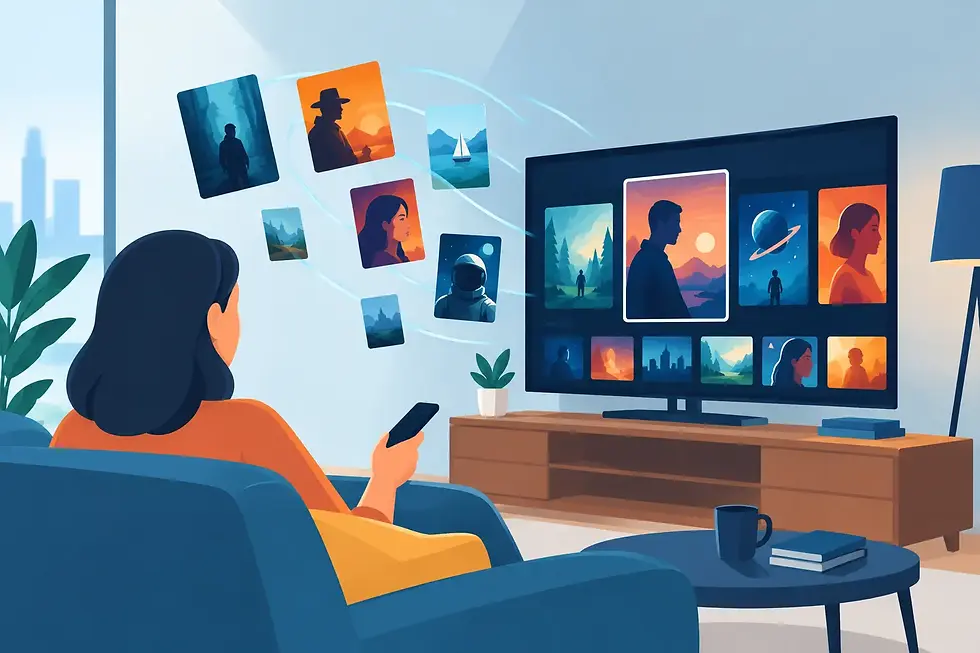
The standard criticism of streaming is that it shrinks cinema. Sometimes it does. A phone held upright on a train is a hostile environment for patient visual storytelling. Algorithmic interfaces reduce films to thumbnails, genres and supposedly useful categories. Autoplay encourages the next choice before the current one has had time to leave a mark.
But size is only part of the problem. The deeper issue is fractured attention. A 55-inch television in a dark room can be more involving than a distracted trip to the cinema. Equally, a large theatrical screen cannot compensate for an audience member who has arrived exhausted, chatty or determined to treat every quiet passage as a cue to check their phone.
A film's power comes from the encounter between its formal choices and the viewer's willingness to stay with them. Streaming makes that encounter easier to begin and easier to abandon. Cinema makes it harder to abandon and, for some people, harder to begin. Neither fact should be ignored.
There is also a question of memory. The theatrical experience often fixes a film in the mind because it is bounded by a place and a time. You remember the packed late screening, the rain outside afterwards, the argument in the pub. Streaming can feel more private and less ceremonial, but privacy has value too. Certain films work best when no one is beside you, when the room is silent and the after-image is yours alone.
Horror needs both discovery and devotion
The false choice is to treat cinemas as art and streaming as convenience. Cinema remains one of the most intense ways to experience a film, especially one built from sound, shadow, duration and unease. It deserves defending, not as nostalgia, but as a unique social art form.
At the same time, streaming has become an essential alternative infrastructure for independent filmmakers. It can extend a film's life beyond the brutal economics of a short theatrical run. It can connect a culturally specific, formally adventurous work with viewers across the UK and beyond. It can turn a quiet release into a long conversation.
That conversation may even be sharper online. Viewers arrive with radically different verdicts: one sees a controlled descent into paranoia; another sees provocation without resolution; a third cannot stop thinking about a performance or a single image. For a film with ambition, disagreement is not a failure of marketing. It can be evidence that the work has refused to become disposable.
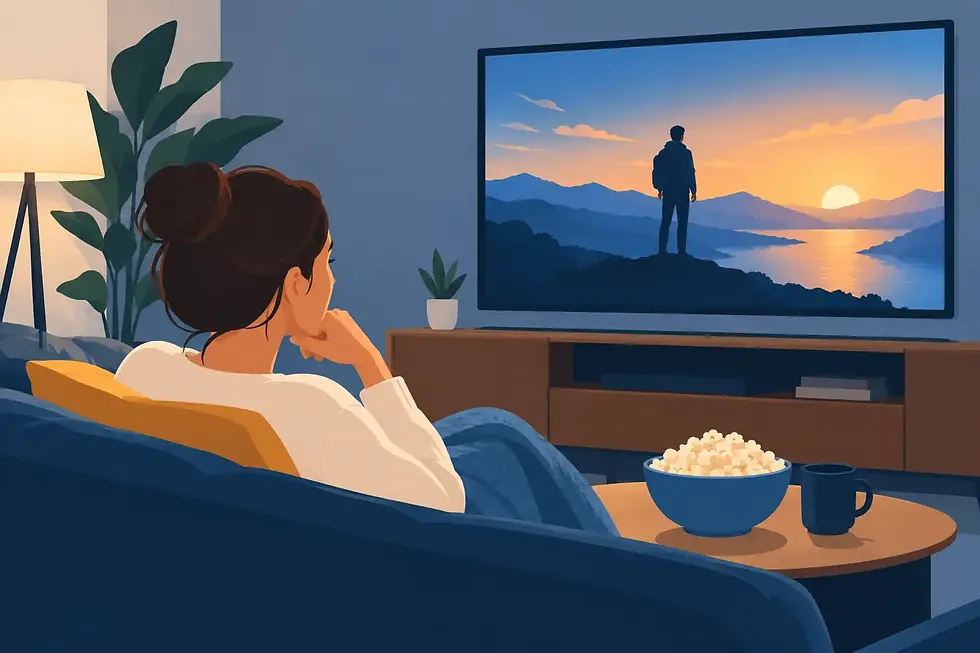
The best viewing choice depends on the film and on you. If a local cinema is showing something difficult, atmospheric or visually composed for the big screen, go if you can. Give it the darkness, the sound and the uninterrupted time it was made to command. If the film is available to stream, do not mistake accessibility for lesser value. Make an occasion of it: dim the lights, silence the phone, use the best screen and speakers available, and let the film take its time.
A great horror film does not need to shout to hold a room. It needs a viewer prepared to listen.

Comments