
Independent Film Audience Engagement Examples

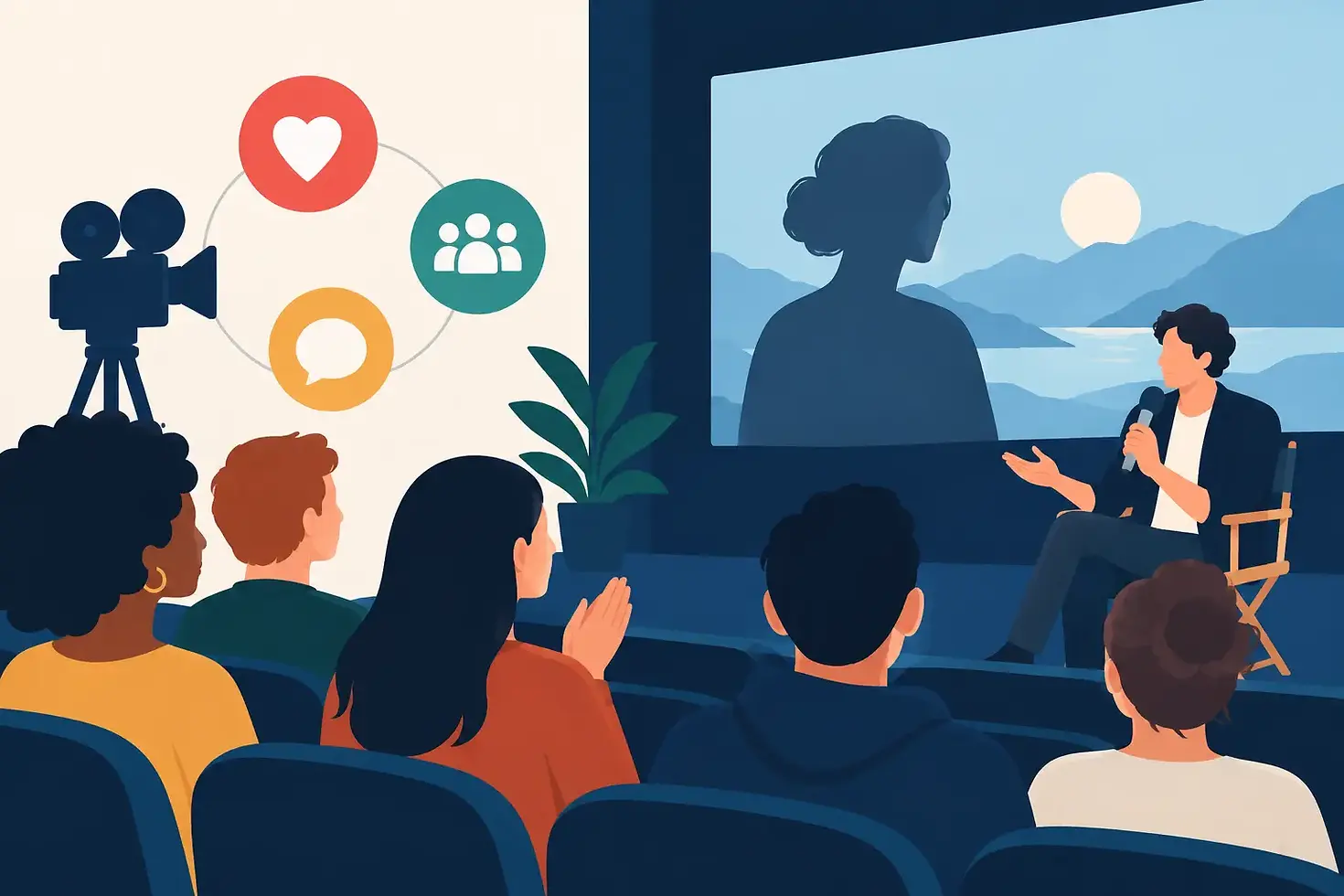
A film does not become culturally alive when the credits roll. It becomes alive when someone argues for it, argues against it, sends it to a friend at midnight, or cannot quite decide what they have watched. The strongest independent film audience engagement examples do not treat viewers as a conversion metric. They give them a position to take.
For slow-burning psychological horror, this matters even more. A film built on atmosphere, ambiguity and moral unease will not satisfy every viewer in the same way. That is not a weakness to be softened by generic marketing. It is material. The campaign should make room for fascination, resistance and the productive friction between them.
Start with a verdict, not a vague invitation
“Watch now” is useful, but it is not a provocation. Independent films need a sharper invitation: one that tells viewers what kind of encounter awaits and gives them language to respond.
A strong example is framing a release around competing reactions. Rather than insisting a film is universally frightening, present the split honestly: one viewer finds it hypnotic, another calls it unbearable, a third sees a family tragedy where someone else sees a nightmare. “One film. Four radically different verdicts” is more compelling than a row of interchangeable five-star quotes because it makes disagreement part of the experience.
This approach works particularly well for surreal horror. It signals that the audience is not being asked to pass a simple quality test. They are being invited to make a case. A viewer who dislikes the film may still comment, share and return to the conversation if their response feels legitimate rather than excluded.
The trade-off is obvious. Polarisation will not deliver the cleanest possible approval rating. But independent cinema rarely needs bland consensus. It needs the right people to feel that the work is worth discussing.
Build engagement around the film's real formal identity
Genre labels attract attention, but they can also create the wrong contract. If a psychological horror film is sold as a rapid-fire jump-scare ride, viewers expecting easy shocks may leave frustrated. If it is presented as a slow-burning descent into dread, shaped by performance, silence and image, the audience arrives better prepared to meet the film on its own terms.
That is where craft-led material earns its place. Short clips can foreground textured anamorphic cinematography, a charged look between characters, an unnerving sound cue or an image that refuses immediate explanation. These are not simply advertisements. They are evidence of a directorial sensibility.
The key is specificity. “Terrifying” says almost nothing. “A domestic argument filmed like a waking nightmare” gives a cinephile something to investigate. “A psychological horror where certainty erodes scene by scene” sets the temperature without explaining the mechanism.
Let the trailer ask a question
The best trailer-led discovery does not solve the film before the audience reaches it. It creates an unresolved question: who is controlling whom, what has really happened, or whether the apparent threat is external at all.
For independent releases, a trailer can also act as the first stage of engagement. End it with a deliberate point of tension, then invite a response that has more texture than “thoughts?” Ask viewers which moment unsettled them most, or whether they read a character as victim, witness or instigator. The question must be answerable before viewing for curiosity, and answerable again afterwards with conviction.
Independent film audience engagement examples worth studying
The Blair Witch Project remains the obvious case because it understood that mythology could travel faster than a conventional advert. Its early web presence, missing-person framing and documentary texture encouraged audiences to investigate the fiction as though it might be evidence. The lesson is not to imitate a 1999 campaign. It is to recognise that a film's world can become a site of participation when the boundary between story and discovery is handled with discipline.
Host offers a different model. Its screen-life format and lockdown-era premise were inseparable from the way audiences encountered it. Viewers did not merely receive a horror film through a familiar digital interface. They saw their own anxious routine reflected back at them. The conversation travelled because the form was immediately legible and socially shareable.
Skinamarink demonstrates the value of committing to an unusual sensory proposition. Its murky images, childhood-nightmare logic and divided reception became the discussion. Some viewers found it terrifying; others found it impenetrable. Neither response cancelled the other. The film's audience engagement grew from people trying to explain an experience that conventional horror language could not easily contain.
These examples share a principle: the campaign does not bolt interaction onto a finished product. It identifies the film's most distinctive tension and lets the audience worry at it.
Make access frictionless, then make response meaningful
A free full-film release on YouTube changes the engagement equation. There is no ticket barrier, no rental decision and no need for a viewer to remember the title later. Trailer curiosity can lead directly to the work itself. For a distinctive independent film, that accessibility is not a compromise in ambition. It is a way to widen the room without flattening the work.
But free access alone is not a strategy. The film still needs a reason to be chosen from the endless scroll. That reason may be an auteur voice, a British-Asian perspective, recognisable cast, an unusual visual format or a promise of genuinely divisive horror. The positioning should be clear before the play button is pressed.
Once viewers have watched, direct them towards a response with stakes. A pinned question beneath the film can be more effective than a generic request to subscribe. Ask whether the ending offers release or repetition. Ask which character the viewer trusted least. Ask whether the film is cruel, compassionate or both.
Moderation matters here. A serious audience will tolerate disagreement, but not lazy dismissal or personal abuse. The aim is a space that feels closer to the foyer after a late screening: animated, contradictory and alert to detail.
Use behind-the-scenes material as interpretation, not filler
Behind-the-scenes content often fails because it arrives as an obligation: a few cheerful set photographs, a cast interview with no real subject, a clip designed to prove that everyone had fun. For a psychological horror film, that can puncture the atmosphere without adding value.
Better material deepens the viewer's reading. A director discussing why a scene was allowed to run long. A cinematographer explaining the choice of lens or shadow. An actor reflecting on the emotional logic beneath a seemingly irrational decision. These pieces reward viewers who have already committed and give critics, programmers and film-minded audiences language they can carry into wider conversation.
Do not release everything at once. A staged rhythm gives the film more than one moment of contact: trailer, release, first audience verdicts, a craft-focused feature, then a response to an interpretative question that has emerged naturally.
Treat disagreement as a form of loyalty
The least useful reaction to a hostile comment is panic. Not every negative response deserves amplification, and some viewers are simply not the audience for a deliberately patient film. Yet a considered objection can be valuable. It proves that the work has been encountered rather than passively consumed.
The distinction is between disagreement and bad faith. “I found the pace exhausting, but the final image stayed with me” opens a conversation. “Nothing happens” may be a useful signal about expectation, but it does not need to become the centre of the campaign. Reply selectively, with confidence, and never apologise for the film being itself.
Ride the Snake is well suited to this approach because its identity rests on a slow-burning, surreal encounter rather than an assembly-line horror promise. The audience does not need to be told what verdict to reach. It needs permission to reach one fully.
A viewer who leaves with a strong answer, a difficult question and someone to argue with has already taken the film further than any slogan could. Make that next conversation easy to enter, and let the film retain enough mystery to keep it going.


Comments