

An Independent Horror Marketing Case Study

A psychological horror film does not need to pretend it is a rollercoaster. This independent horror marketing case study starts with a harder, more valuable proposition: make the right audience feel that a film has been made for them, then give them a reason to argue about it once the credits end.
For independent horror, the usual campaign grammar can be a trap. A cut of shocked faces, a slammed door, a loud sting and a promise of “the scariest film of the year” may create a momentary click. But it also sets an expectation. If the film is slow, surreal, character-led and morally uncertain, that expectation can become a bad review before the viewer has met the work on its own terms.
The stronger approach is not to market a psychological horror as a conventional fright machine. It is to market its atmosphere, authorship and friction. That means accepting a trade-off: the campaign may attract fewer casual genre viewers at first, but it will attract people more likely to stay, think, share and defend their response.
Independent horror marketing case study: sell the encounter
The central challenge is positioning. Independent horror is not one audience. Some viewers want relentless pace and clean narrative pay-off. Others seek dread that accumulates, images that linger and characters whose motives do not arrive with a label attached. A campaign that speaks to everyone often sounds like it believes in nothing.
Ride the Snake is best understood as an encounter rather than a product package. Its value lies in the tension between recognisable genre language and a more authored cinematic promise: a slow-burning psychological horror, shaped by textured anamorphic imagery, intense performance and an increasingly unstable sense of reality.
That distinction should lead every piece of marketing. The trailer is not there to explain every turn. It is there to establish a contract with the viewer. This is the temperature of the film. This is the kind of unease it pursues. This is a film that asks for attention, not a film engineered to fill silence with noise.
For an audience used to discovering work through clips, thumbnails and algorithmic recommendations, clarity is not the enemy of mystery. A campaign can be precise about tone without exposing plot. “Slow-burning psychological horror” is more useful than vague claims of terror because it tells cinephiles exactly why they may want to press play - and tells viewers seeking a disposable jump-scare binge that this may not be their night.
Authorship is a marketing asset, not end-credit detail
Independent film campaigns frequently undersell the person who made the film. That is a missed opportunity, especially when the director’s perspective is part of the work’s identity. Writer-director Shani Grewal should not sit at the edge of the campaign as a technical credit. The authored vision is one of the reasons the film can stand apart from anonymous genre content.
Auteur positioning does not require inflated claims. It requires specificity. Emphasise the choices: psychological pressure over spectacle, surreal dislocation over familiar horror shorthand, cinematic composition over disposable coverage. These are not just production notes. They give the viewer a way to understand what makes the film worth seeking out.
The British-Asian creative identity adds another layer, provided it is treated as a lived artistic perspective rather than a campaign badge. Cultural specificity has weight when it can be felt in character, setting, emotional conflict and gaze. It should deepen the invitation, not reduce the film to a marketing category.
This is particularly relevant for festival-minded audiences. They do not need to be told that every independent film is “ground-breaking”. They want evidence of judgement. A disciplined visual identity, confident copy and material that foregrounds craft all signal that the film has a point of view.
Free access changes the funnel
Making a feature available free on YouTube can look, from an old distribution mindset, like giving away the thing that ought to be monetised. For a direct-to-audience independent project, it can be the opposite. Free viewing removes the final barrier between curiosity and commitment.
A viewer who has encountered a compelling trailer does not need to locate a screening, compare rental prices or decide whether the film is worth a separate transaction. They can watch immediately. That matters most for challenging work. A familiar franchise can demand effort from its audience. A distinctive independent feature earns trust one viewing at a time.
The trade-off is obvious: free access does not automatically produce attention, and view counts alone do not create cultural value. The campaign has to make the click meaningful. The feature needs a clear viewing invitation, while trailers, stills, cast material and behind-the-scenes elements create several routes into the same world.
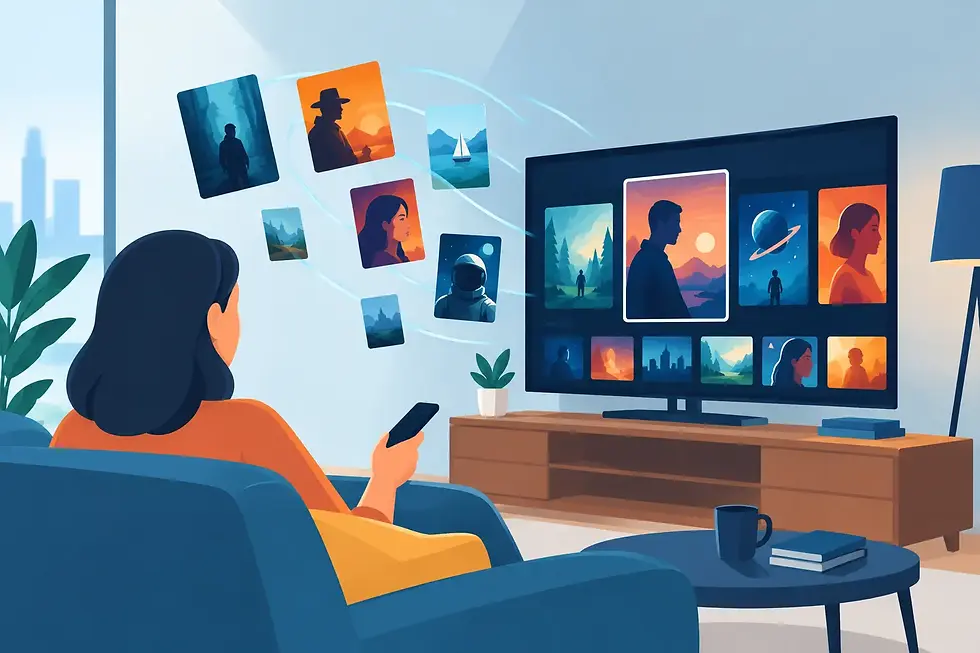
This turns distribution into a discovery loop. A striking image introduces the mood. A trailer tests appetite. A cast clip gives audiences a human entry point. The full film rewards the curious. Then the response - admiration, frustration, interpretation or outright disagreement - supplies the next round of conversation.
That loop is more useful than treating every asset as an advert with the same job. A trailer should provoke. A filmmaker clip should articulate intent without over-explaining it. Production imagery should prove craft. A viewer verdict should make the experience feel socially alive.
Make division part of the proposition
“One film. Four radically different verdicts” is not a defensive line. It is an invitation to serious viewing. For a film built around ambiguity and slow pressure, consensus is not the only measure of success. A divided response can be evidence that the work has touched something real enough to resist easy consumption.
There is a line to hold here. Marketing polarisation should never mean manufacturing outrage or baiting viewers who were promised a different film. The aim is not to make audiences angry for reach. It is to frame disagreement as a legitimate response to cinema that leaves room for interpretation.
Use verdicts that reveal contrast. One viewer may praise the controlled atmosphere; another may find the pace punishing. One may see a haunting psychological portrait; another may demand firmer answers. Presented honestly, these reactions make the campaign more credible than a wall of five-star superlatives.
They also give potential viewers a useful choice. Those who hear “slow” and switch off have saved themselves a disappointing evening. Those who hear “unsettling”, “elliptical” or “divisive” may feel the exact pull the film needs. The campaign becomes a filter, and filters are valuable when attention is scarce.
The trailer must promise the right kind of fear
A strong trailer for this kind of work is a piece of editing with its own dramatic intelligence. It should not attempt to compress a 90-minute descent into a plot synopsis. Nor should it mistake confusion for intrigue. The viewer needs an emotional line to hold: isolation, obsession, distrust, grief, temptation or a relationship under pressure.
Sound is especially important. A pause, an intrusive texture or a line delivered slightly too calmly can carry more menace than a barrage of impacts. Visuals should privilege the film’s distinctive frames and its sense of altered reality. If anamorphic cinematography is a genuine part of the experience, let the audience see that scale and texture rather than burying it beneath generic title cards.
Different cuts can serve different moments. The principal trailer establishes the film’s identity. Shorter social edits can isolate a look, a dilemma or a provocative line. None should spoil the film’s turns merely to win a few extra seconds of watch time. In psychological horror, withheld information is not an absence of material. It is part of the material.
Measure attention that has depth
For a direct-to-audience release, the most revealing metrics are not always the loudest. Reach matters, but completion, comments with substance, repeat viewing and the quality of audience language matter more. Are viewers discussing a scene, a performance or an interpretation? Are they using the terms the campaign established, or finding their own? Are critics and film-minded viewers treating the feature as an object of discussion rather than a piece of content that passed through the feed?
Comment sections are imperfect evidence. They can be blunt, funny, hostile and occasionally illuminating. Yet for a film that invites divergent readings, they are also a living record of reception. The task is not to police every response into praise. It is to recognise the questions worth carrying forward in future assets and editorial material.
The real lesson is simple: independent horror marketing works best when it refuses to apologise for the film’s actual temperament. Give viewers an honest signal, remove unnecessary friction, and let the disagreement be part of the theatre. The audience looking for a stranger, more serious night of horror is already out there. It needs a campaign confident enough to meet it on its own terms.


Comments