
Why Psychological Horror Is the Best Horror
- Anudheep Sriraj
- Jul 11
- 5 min read

A slammed door can make anyone jump. The question that follows is harder: who shut it, why, and did it happen at all? That is why psychological horror is the best. It does not merely startle the body for a second. It recruits the mind, then leaves it working after the screen has gone black.
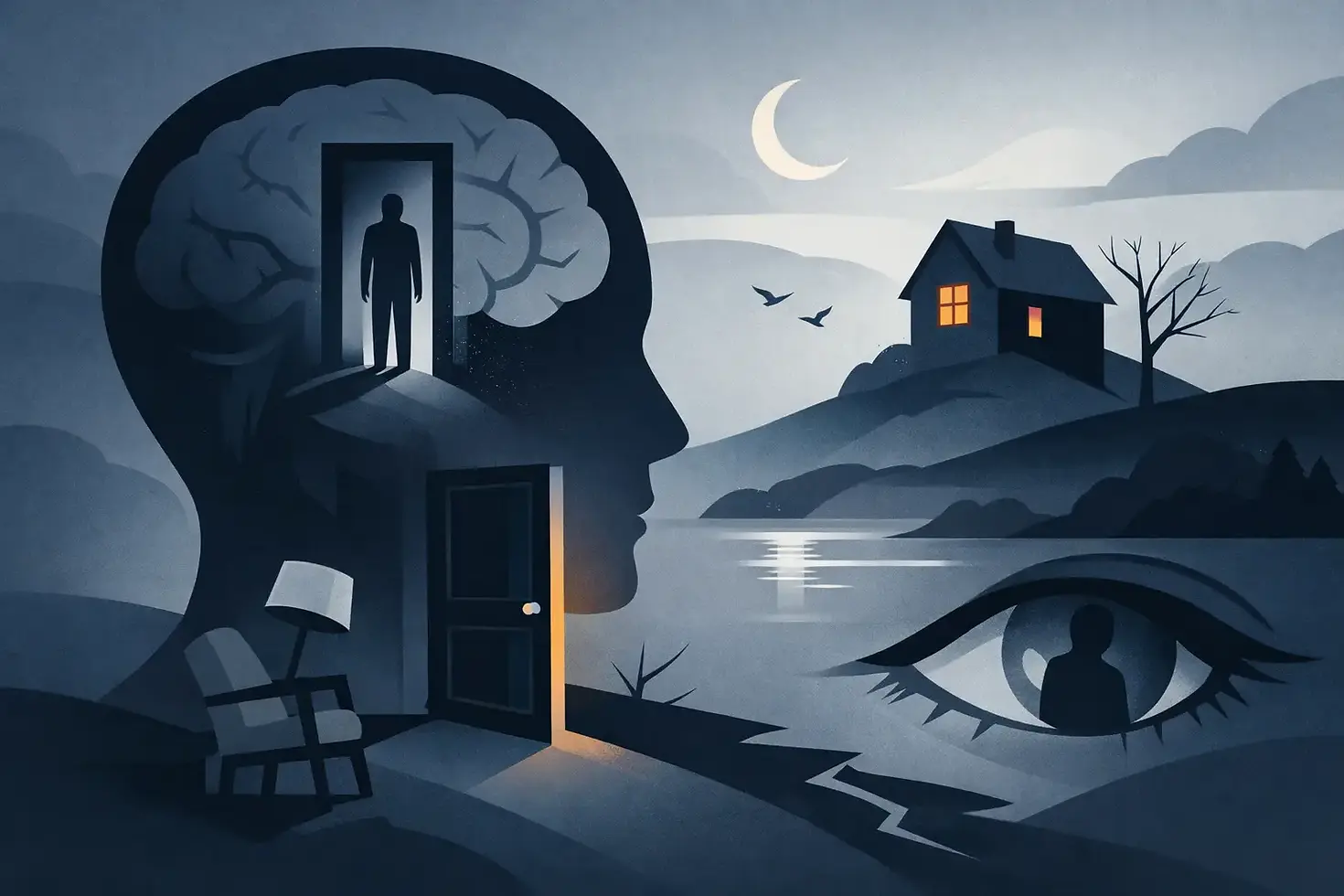
For viewers who want more than a sequence of shocks, psychological horror offers a more intimate kind of fear. Its threats do not always arrive with claws, masks or a rulebook. They arrive as a look held too long, a room that feels fractionally wrong, a memory that refuses to sit still. The genre understands a brutal truth: the mind is not a safe place simply because it is familiar.
Why psychological horror is the best at creating dread
Conventional horror often declares its danger early. There is a creature, a killer, a curse or an infection. The pleasure lies in watching characters understand the rules and attempt to survive them. There is nothing inherently lesser about that machinery. A great monster film can be elegant, political and wildly entertaining.
Psychological horror plays a different game. It withholds certainty. Is the danger external, internal, inherited, imagined, or all four at once? The viewer is not positioned safely above the protagonist, armed with superior knowledge. We are locked inside their perceptions, sharing their panic and their blind spots.
That uncertainty creates dread rather than simple surprise. A jump scare has an immediate physical effect, then releases tension. Psychological horror can make a quiet corridor unbearable because it has taught us to mistrust what is absent from the frame. The fear is not only that something will appear. It is that we may have already missed it.
This is where formal craft matters. A slowed rhythm, an off-kilter composition, a sound that seems to come from nowhere, or a face isolated at the edge of an anamorphic frame can do more damage than a loud musical sting. The image is not simply showing a threat. It is asking the audience to search for one.
The unseen is often more personal
What we cannot name tends to adapt itself to us. A plainly defined villain may be frightening, but an ambiguous threat allows each viewer to bring their own private anxieties into the film. Grief, obsession, shame, paranoia, family history and fractured identity become active forces rather than tidy backstory.
The best psychological horror does not present mental distress as a cheap twist or a decorative eccentricity. It finds horror in the destabilising experience of losing faith in one’s own judgement. That requires care. There is a difference between using illness as a villain and portraying a consciousness under genuine pressure from trauma, manipulation, isolation or the inexplicable.
Horror with something at stake beyond survival
Death is a high stake. Psychological horror often finds stakes that cut closer. What if a character survives but cannot trust their partner? What if they uncover a family truth that remakes their sense of self? What if the act of seeing clearly costs them the life they thought they had?
These films understand that fear and desire are often tangled together. A protagonist may be drawn towards the very house, person or memory that is undoing them. They may want recognition, absolution, intimacy or control. That pull gives psychological horror its peculiar charge: the character is not merely fleeing danger. They are sometimes moving towards it because it offers an answer they cannot stop seeking.
This makes the genre especially suited to adult dramas. The terror can grow out of compromised relationships, professional ambition, cultural expectation, parenthood, bereavement or the humiliating need to be believed. Such material is not less frightening because it is recognisable. It is more frightening because it is.
A ghost in a bedroom can be unnerving. A marriage in which neither person can agree on what happened last night can be devastating. The supernatural may still be present, but it becomes part of a larger emotional architecture rather than the whole building.
Ambiguity is not a cop-out
Psychological horror is often dismissed when it refuses to explain itself. Sometimes that criticism is fair. Ambiguity without precision is not mystery; it is vagueness wearing a serious expression. A film cannot simply hide information and call the result profound.
But deliberate ambiguity has a different purpose. It gives the audience evidence, contradictions and recurring images, then asks them to make meaning from the pressure between them. The answer may not be singular, yet the experience can still be exact. A final image can feel inevitable even if viewers disagree about what, literally, took place.
That disagreement is part of the pleasure. One viewer sees a haunting. Another sees a breakdown. A third sees a character confronting a truth too painful to articulate directly. All three may be responding to the same carefully placed details. One film. Four radically different verdicts. That is not a failure to communicate. It is cinema continuing beyond its running time.
Psychological horror rewards attention because it is built for rewatching. The first viewing is governed by feeling: anxiety, curiosity, revulsion, fascination. The second reveals the design. A line that seemed casual becomes loaded. A colour returns. A cut becomes suspicious. The film has changed because the viewer has changed.
Atmosphere is not decoration
In this territory, atmosphere carries narrative weight. Texture, duration and sound shape what the audience believes before any explanation arrives. A slow-burning film needs confidence in its own tempo. It has to know when to linger and when to cut away, when silence is more threatening than dialogue, and when a location has become a psychological landscape.
This is why visually distinctive independent horror can land with such force. It is less beholden to the demand for a scare every few minutes. It can allow a domestic space to become strange by degrees. It can trust a performance to hold a close-up until the smallest flicker of doubt becomes seismic. It can make cultural specificity part of the fabric of fear rather than a label added afterwards.
British psychological horror has a particular affinity for this mode: social restraint, uneasy homes, buried resentments and the sense that politeness may be concealing something rotten. Yet the strongest films avoid treating national character as a gimmick. They find the universal inside the specific. A family ritual, an urban flat, a familiar phrase or a childhood memory can become the doorway into something far less containable.
Ride the Snake belongs to this more demanding tradition: a slow-burning psychological horror that treats surrealism, performance and image-making as instruments of unease, not decoration around a conventional scare package.
The trade-off: psychological horror asks more of its audience
There is a reason some viewers prefer direct, kinetic horror. Psychological horror can be patient. It may deny the clean release of a fully explained ending. It can leave a viewer unsettled rather than satisfied in the usual sense, especially if they expect the film to resolve every question in a neat final act.
That is a trade-off, not a flaw. Not every night calls for moral ambiguity and a creeping sense of ontological collapse. Sometimes a sharp slasher or a creature feature is exactly the right pleasure. But when a film earns its slow pace, psychological horror offers a deeper aftertaste. It recognises that real fear rarely arrives with exposition. It accumulates, contradicts itself and changes shape when we look at it directly.
The best way to watch it is therefore simple: give it your attention. Put the phone away. Notice what the film repeats, what it avoids showing, and whose version of events is being privileged. Do not rush to solve it while it is still unfolding.
Let the unanswered question stay in the room for a while. If it follows you into the quiet afterwards, the film has done exactly what the best psychological horror does.


Comments